




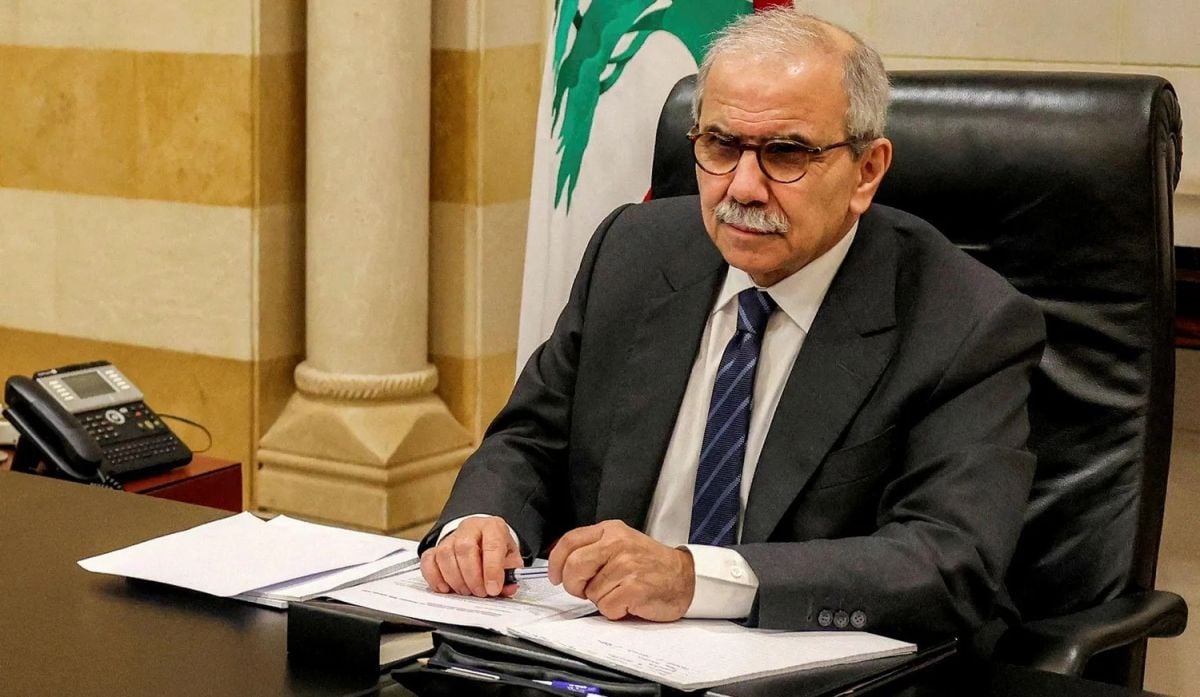
The Lebanese Prime Minister, Nawaf Salam, during a meeting at the Grand Serail in July 2025. (Credit: anwar Amro/ AFP)




BEIRUT — Lebanese Prime Minister Nawaf Salam took a tougher stance toward Hezbollah on Sunday evening, amid two cases that have pitted the state against the party: a tense raid on a warehouse containing medication deemed unfit for consumption near Beirut’s southern suburbs, and the Oct. 5 seizure of explosives in Dahr al-Baidar, between the Bekaa Valley and the capital.
In a post on his personal X account, rather than his official account, Salam drew a response from several Hezbollah lawmakers, who accused him of submitting to foreign “dictates” and warned that, under such “pressure,” the country was “heading toward ruin” and facing an “imminent explosion” in the streets.
In his post, Salam said he had contacted Justice Minister Adel Nassar and Court of Cassation Public Prosecutor Rami al-Hajj regarding the latter case to “review the measures taken to expand the investigation and the events that followed.” The prime minister, a former president of the International Court of Justice, called for “the arrest of all persons involved in the possession and transport of illegal weapons” so they could be prosecuted and punished. “Our only limit is the one set by law,” he added.
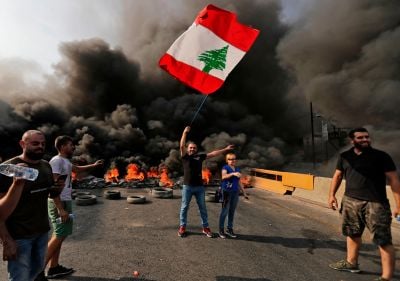
Hezbollah acknowledged ownership of the truck and its cargo of C-4 and TNT through one of its MPs, Hassan Fadlallah. At a press conference last Thursday, Fadlallah stated that the explosives were intended for the “resistance” against Israel in southern Lebanon. Hezbollah has not claimed any new attacks in the South since June and the signing of the memorandum of understanding between the United States and Iran, while the Israeli army continues to occupy about 620 square kilometers of Lebanese territory there and demolish entire villages, claiming to be destroying Hezbollah “infrastructure.”
Army deployment in Greater Beirut
Nawaf Salam called on all parties to “prioritize the country’s interest and not subordinate it to external interests or goals.” He stressed that “decisions of war and peace must remain exclusively in the hands of the state.” With tensions still high between Washington and Tehran, Hezbollah’s sponsor, Beirut fears a new war between the Hezbollah and Israel if hostilities resume in the region. In October 2023 and March 2026, Hezbollah fired rockets toward northern Israel in solidarity with Gaza and the Iranian regime. The launches were swiftly followed by Israeli offensives that killed nearly 9,000 people in Lebanon.
Regarding the aftermath of the so-called "Galerie Semaan" affair, which unfolded in a neighborhood in Beirut’s southern suburbs where security forces were briefly surrounded during Friday’s raid on a pharmaceutical warehouse, the prime minister praised the army’s deployment in Greater Beirut over the past two days. On Saturday, following the previous day’s tensions, the military announced that it had deployed additional patrols in the area. During a call on Sunday with Army Commander Gen. Rodolph Haykal and Internal Security Forces Director General Raed Abdallah, Salam said the measure “shows citizens that the state is watching over their safety and protection,” particularly following convoys of fighters from the pro-Iranian party. “It goes without saying that stability cannot be restored to the country until state authority is extended across the entire national territory,” he added.
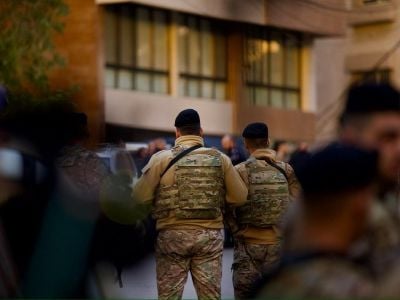
On Sunday, following accusations by Paula Yaacoubian, a parliamentarian who emerged from the protest movement, the son of Hezbollah Secretary-General Mohammad Naim Qassem issued a statement denying any link to the raided warehouse. The police raid and seizure of medication deemed unfit for consumption took place under a judicial order issued by Court of Cassation Public Prosecutor Ahmad Rami Hajj, at the request of Health Minister Rakan Nasreddine, who is affiliated with Hezbollah. Nasreddine had already denied any link to the warehouse or its contents. The party also maintained that the security patrol had entered a sensitive area without respecting what it called the “coordination mechanism agreed upon with the authorities.”
Hezbollah MP Ibrahim Mussawi, meanwhile, called on the authorities in a speech delivered in Bir Hassan, in Beirut’s southern suburbs, to stop “putting pressure on our supporters, intimidating them and exerting pressure in the streets, because this will lead to an explosion that is now imminent.” He also denounced submission to “foreign dictates” and urged “those who believe they are facing foreign pressure because of the positions they hold to resign.”

 2 p.m. recap: Pit discovered north of Beirut, Hezbollah warns of ‘imminent explosion’ in the streets, settlers arrested in West Bank